Working the Austin day and the home-country night
Your workday runs on Central Time and the people at home live on another clock. Peer notes on family calls, guilt and the habits founders keep across time zones.
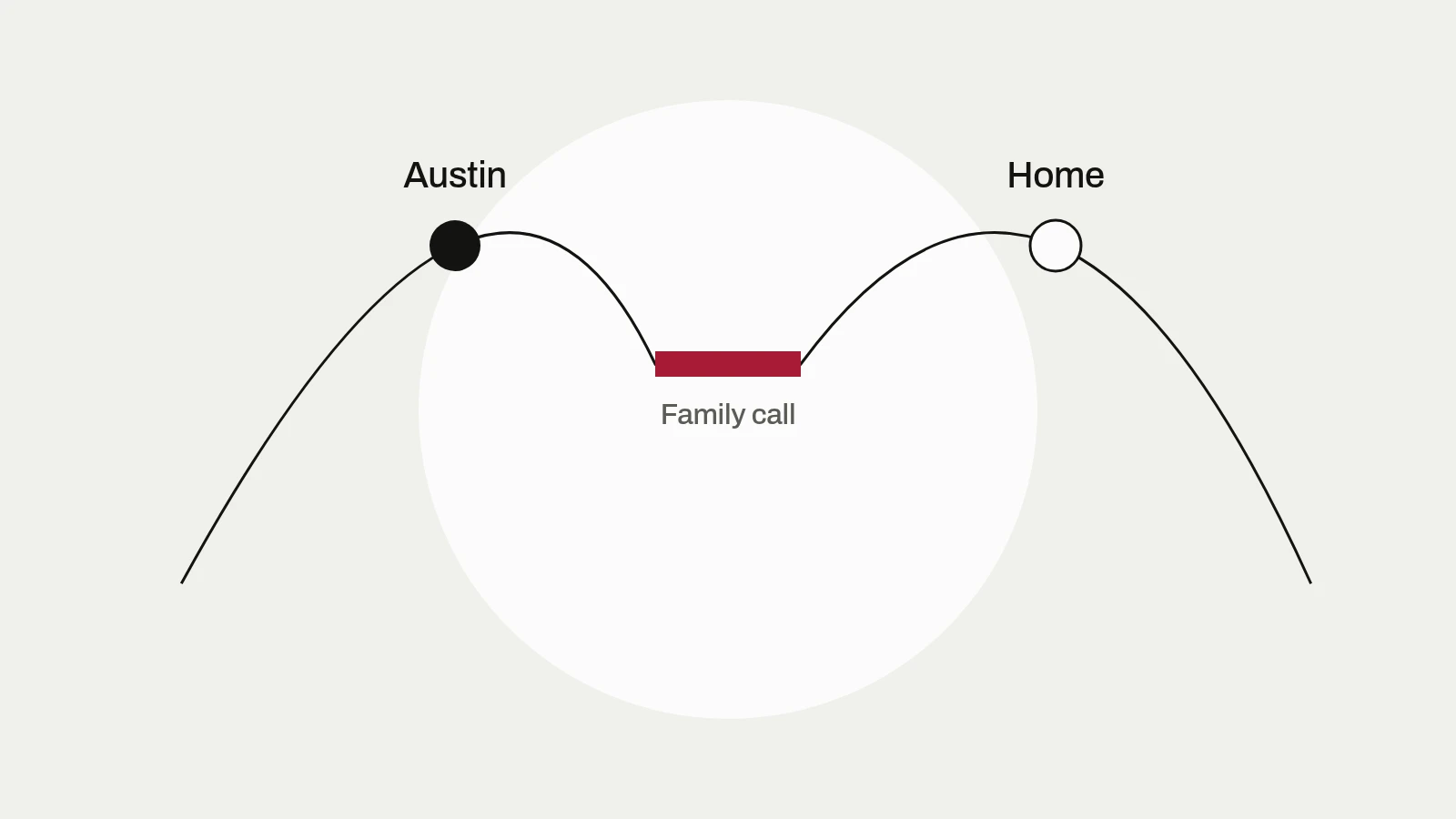
A founder at the IFN meetup table says they took their mother's call at five in the morning. It was the only window before her evening ended. At nine they ran a customer meeting, and the customer had no idea the founder had already been up for hours. Around midnight they were answering the family group chat, because that was when everyone at home was having breakfast and sending photos. Nobody planned the day that way. It became the day, and then it became most days.
The room hears some version of this most months. This post is peer orientation on the part of founder life that sits outside the company: staying close to family when your workday runs on Central Time and the people you answer to at home live on a different clock. It covers what founders say gets squeezed and what they have tried. It is not a productivity system, and it does not replace a doctor, counsel, or a CPA.
Disclaimer
This is not legal, tax, immigration, medical, or financial advice. IFN shares what founders in the room tend to talk through. Health, travel, status, and money sent across borders all depend on your facts. Verify with licensed professionals and official sources before you act.
The shape of the double day
Most founders describe two days stacked on top of each other. The Austin one has customers and a calendar. The home one has no calendar at all, which is part of why it spreads.
It usually starts before dawn. A parent calls early because that is a reasonable hour on their side, and you pick up because missing it means waiting another day. Then the Austin day runs as normal. Late at night the phone lights up again: the group chat, a sibling with news, a question about a form your father needs help with.
Birthdays are the ones people mention most. A child turns a year older or a parent marks a milestone, and the founder is on a sales call when the cake comes out. They watch the video afterward, between meetings.
Then there is the call that comes at the wrong hour. A parent's health worry, a test result, a hospital visit. It tends to land in the middle of the night or in the middle of an investor update, and neither is a good time. Some founders say this is when the distance stops feeling abstract.
What gets lost
Sleep is the obvious one, and founders say so plainly. They also describe two quieter losses.
The first is presence with the people who are actually in Austin. That might be a partner who moved with you, or new friends from the meetup. If your mornings and nights belong to home, the people here get the tired middle of the day, or nothing. A founder who spends every evening on the phone with home can go months without really arriving in Austin. The first 90 days post touches on what helps people settle.
The second is harder to name. Some founders describe it as never quite being in one place. Your body is in Austin, your attention keeps checking on a city many hours away, and you are a little behind in both. People say it makes small decisions feel heavier than they should.
If your sleep or your health is suffering, talk to a doctor. That is the plain answer, and the room will tell you the same.
What peers say they set up
Nobody in the room has a system, and the ones who tried to build one usually dropped it. What comes up instead is a handful of habits that seem to hold.
A fixed family call slot that both sides protect. One time, on set days, that works at both ends. Founders say protecting it matters more than which slot you pick. That means not booking a customer call over it, and asking family to hold it too instead of calling whenever something comes up. Some keep it short on weekdays and longer on weekends.
Telling family when you are actually reachable. It sounds obvious, and people skip it anyway. Parents may not know what your day looks like here, or they assume you are free because you used to be. Founders who sent a plain message ("I am in meetings during these hours, I will call back after") say it eased a lot of quiet worry on the other side. Family stopped reading a missed call as bad news.
Letting some messages wait until morning. Not every group chat message needs an answer at midnight. Some founders mute the chat at night and let calls from a few people ring through, so a real emergency still reaches them. Others agree with family on one line that means "call me now."
One longer visit a year, planned early. Short trips home squeezed between fundraising and launches tend to leave everyone feeling shortchanged. Founders who block one longer visit well ahead say family has something to look forward to, and the business can plan around it. If travel touches your status, take that question to immigration counsel before you book.
One practical thing catches people out. Daylight saving time does not change on the same dates everywhere, and some countries do not change their clocks at all. The US dates are set out by NIST, and the EU sets its own in Directive 2000/84/EC. For a stretch each spring and fall, the family slot can drift by an hour, and someone ends up waiting on a call that comes at the wrong time. Founders who have been caught by it now check the dates for both places and send a reminder home ahead of time.
The guilt runs both ways
This is the part of the conversation where the table tends to go quiet.
Founders feel guilty toward home for not being there: the missed birthday, or the sibling carrying more of a parent's day-to-day care. They also feel guilty toward the people here, and toward the company, for being half-present while they answer home. Some carry both at once and assume everyone else has it worked out.
What peers describe is a point where they decide on purpose what they will carry and what they will not. That might mean accepting that a sibling at home handles daily care while you take on a set share of something else. It might mean saying out loud that you will miss some events and be fully there for others. People say the guilt stays, but it sits differently once it is a choice they made.
Talking it through with other founders who live with the same clock helps more than people expect. The first 50 connections post covers how people find those conversations early.
When we stop talking
The room is useful for patterns and for company. Bring in licensed help when any of these come up:
- Your own health, including sleep: a doctor
- Caring for a parent from abroad, including medical decisions or paperwork on their behalf: their doctors and care professionals where they live, and a lawyer in that country if decisions need formal authority
- Travel plans, time spent outside the US, and what your status allows: immigration counsel
- Money you send home regularly and how it is treated on either side: a CPA, ideally one with cross-border experience
These are separate roles, and one professional rarely covers all of them.
Soft next steps
Come to the next IFN meetup with one concrete family-time question: a call slot that keeps slipping, a visit you are trying to plan, or a boundary you have not said out loud yet. Guests are welcome; register on Luma or check dates on ifn.community. The meetup happens at Station Austin. If you want the private member channel and members-only call, Become a member. Fuller founder-life notes live with membership and the Resources hub as that catalog fills in.
Sources
- National Institute of Standards and Technology, Daylight saving time
- European Union, Directive 2000/84/EC on summer time
- Station Austin, stationaustin.org