Moving with family while you build: the first year in Austin
The company landing is only half the move. Peer notes on the first family year in Austin: schools, child care, the partner's year, kids and the founder's pace.
A founder sits near the end of the IFN meetup table, half in the conversation and half on their phone. They keep checking the time. School pickup is in an hour, and their partner has a job interview across town, so the handoff has to work. The company is doing fine: a few US customers, a small team at home, a pipeline that makes sense. The family is the part still being put together. Nobody in the house has worked out yet what a normal Tuesday looks like.
Some version of this comes up most months. This post is peer orientation on the first family year in Austin: schools and child care, the partner's year, the kids' first months, and the pace a founder can keep when the people at home need them more than usual. The First 90 days post covers housing and documents. This one is about family life, and it does not replace counsel, a doctor, or the school district.
Disclaimer
This is not legal, medical, immigration, tax, or school-admissions advice. IFN shares what founders in the room tend to talk through. Your family's status, school eligibility, health coverage, and taxes all depend on your facts. Verify with licensed professionals and official sources before you act.
Two moves on two clocks
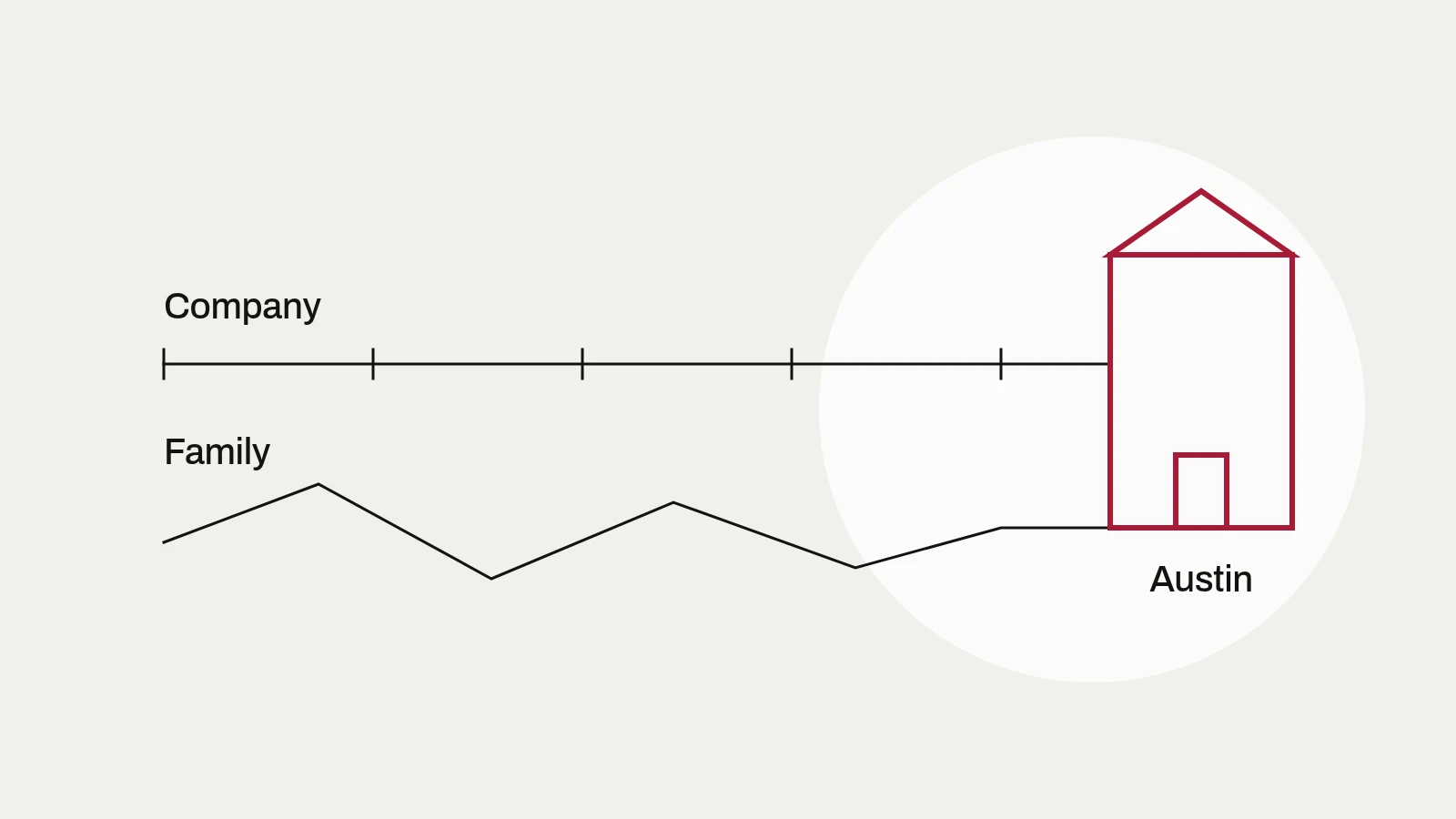
Founders who moved with family describe the first year as two moves happening at once. The company move has a plan. There is an entity, a bank account, a first customer, and someone to call when something breaks. The family move mostly runs on improvisation.
The company also has a team. The family has two adults, one of whom is usually busier than they expected, and children who did not choose any of this. Peers say the gap between those two moves is where most of the strain in year one comes from. The work going well does not close it. Sometimes it makes it wider, because the founder is the one person in the house with a full calendar and a reason to be out every day.
Schools: go to the district first
Parents in the room say the same thing about schools: start earlier than you think you need to, and go to the source.
Public school enrollment goes through the school district. For families living within its boundaries, Austin ISD has an enrollment page that is the place to begin. The greater Austin area includes more than one district, so peers suggest confirming which district your address belongs to before you assume anything. TEA has a school district locator and a page on enrolling and finding schools. At the state level, the Texas Education Agency is the agency that oversees public education in Texas.
Parents' groups online are full of confident answers about enrollment. Peers say many of those answers were right for someone else's situation, or for a different year. The room does not tell anyone which documents they need, who is eligible, or when the cutoffs fall. Those questions go to the district directly, ideally in writing, so you have the answer on record.
Child care and the gap before school
Child care comes up just as often, and it is harder to plan from abroad.
Founders with younger children describe waitlists that were longer than they expected and a gap between arrival and the first day of school that nobody had budgeted time for. In that gap, one parent usually absorbs the care by default. Peers say it helps to decide out loud who that will be and for how long, instead of letting it fall on whoever is not on a sales call that morning.
The Texas Workforce Commission has a child care page with official information about child care programs in the state. Peers point to it as a starting point and then compare notes on what they actually found locally. Summer is its own problem in year one, and the parents who planned for it early say they were glad they did.
The partner's year
This is the part founders say they underestimated most.
The founder arrives with a purpose, a network that grows every week, and a reason to be in rooms like this one. The partner often arrives with a career on hold, no colleagues, and a city where they know nobody. Some partners keep remote work from home and end up living on that time zone, awake when the house is asleep. Some are starting over and job hunting in a market that does not recognize their credentials or their old employer's name.
Whether a partner can work in the US at all depends on their status. That is a question for immigration counsel, and the room does not guess at it.
What peers say helped was the partner building a life that did not run through the founder's company. Their own friends, their own groups, their own reason to leave the house. The Austin ecosystem map is written for founders, but some partners have used the community side of it to find their own way in. Partners are also welcome at the meetup as guests, and a few founders say bringing them early changed how the move felt at home.
The kids' first months
Founders talk about their children carefully in the room, and they describe what they saw instead of offering theories.
The first months at a new school can be lonely. A child may understand the lessons and still miss the jokes. Accents get noticed. Lunch looks different. Some children settle in quickly and some take most of the year. Parents mention the weekend call home, timed around the gap between Central time and wherever the grandparents live, and how a good call can leave a child cheerful or quiet for the rest of the day.
Peers do not give each other parenting advice here. When a parent is worried, the room usually says one thing: talk to the school, and if it feels like more than settling in, talk to your child's doctor or a licensed counselor. They are the right people for that question.
Guilt and the pace
The company wants everything in year one. So does the family. Founders admit there were weeks when they gave the company the better hours and the family got what was left.
Founders who look back on the first year say they wish they had decided early what was protected, before the calendar decided for them. What they named varies, but the same few things come up:
- school drop-off or pickup on fixed days of the week
- dinner at home most nights, even if work resumes afterward
- one weekend day with no investor or customer calls
- time alone with their partner, scheduled like a meeting if that is what it takes
None of this is a rule. Peers mention it because the founders who protected something had an easier second year than the ones who planned to slow down "once things settle."
Health care, early
Sort out health coverage and care early, using official sources and your own providers. Peers raise it in the first conversation and then hand it off. It is not something to piece together from the meetup table.
When we stop talking
The room is useful for patterns and for knowing you are not the only one. Bring in the right people when any of these come up:
- Dependents' immigration status and whether a partner can work: immigration counsel
- School eligibility, enrollment, and placement: the school district, directly
- Health coverage for the family: a licensed insurance professional, and your own doctors for care
- Taxes for a family that moved partway through a year: a CPA, ideally one with cross-border experience
Each of these is a separate role. Peers say the families who lined them up early had fewer surprises later in the year.
Soft next steps
Come to the next IFN meetup with one concrete family-year question: a school or child care gap you are trying to plan around, how your partner is finding their footing, or how other founders protected time at home. Guests are welcome; register on Luma or check dates on ifn.community. The meetup happens at Station Austin. If you want the private member channel and members-only call, Become a member. Fuller landing notes and family-year materials live with membership and the Resources hub as that catalog fills in.
Sources
- Austin Independent School District, Enrollment
- Texas Education Agency, tea.texas.gov
- Texas Education Agency, School district locator
- Texas Education Agency, Enrolling and finding schools
- Texas Workforce Commission, Child care
- Station Austin, stationaustin.org