Austin ecosystem map for international founders
A peer sketch of Station Austin, Capital Factory naming, IFN meetups, and how newcomers get warm intros without inventing a partner directory.
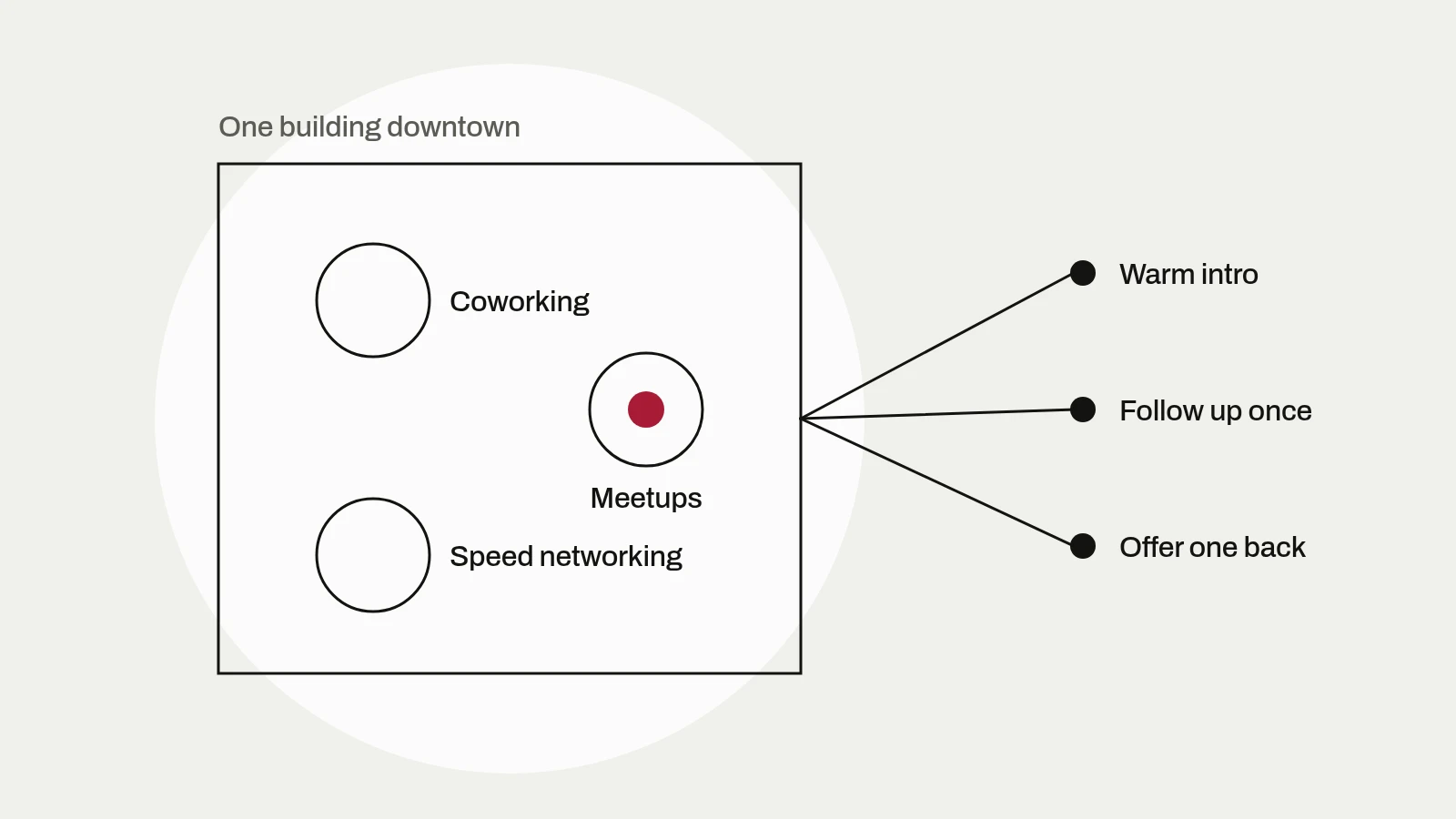
A founder who moved to Austin three weeks earlier walks into the building at 701 Brazos St on a Tuesday evening and asks the front desk which room the founder meetup is in. The answer is "which one?" There are several events that night. They find the IFN room, sit down, and the first thing they ask the person next to them is how anyone figures out who is who in this city.
That question comes up often enough that it deserves its own post. This is a peer sketch of the rooms international founders tend to pass through in Austin, and how newcomers turn cold arrivals into warm introductions. Not a program directory. Not a ranking.
Disclaimer
This is not legal, tax, immigration, or investment advice. IFN shares what founders in the room tend to talk through. Organizations, membership products, and program details change. This post does not endorse any program, investor, or service provider beyond the partners named below. Check current details directly with them before you act.
The building most people mean
When Austin founders say "let's meet downtown," they often mean 701 Brazos St.
The venue IFN uses for its monthly meetup is Station Austin (styled STATION Austin on its own site), at stationaustin.org. Station Austin is powered by Capital Factory. In 2026, Capital Factory spun out STATION Austin as a nonprofit to carry the community and programming side of the work.
You will hear people use both names for the same address. Someone who has been in Austin for years may say "Capital Factory" out of habit, while someone newer says "Station." If you are meeting someone there, confirm the address and the floor or room, not just the name.
Capital Factory still comes up when people talk about investment and the accelerator history tied to that building. If those conversations matter to you, ask people who have direct experience rather than relying on secondhand summaries.
Who is in the room
On any given evening, the building might host several meetups at once: industry groups, technical communities, investor office hours, and founder circles. Think of these as other rooms in the same building. Some will be useful to you and some will not. Founders who have been through it suggest sampling a few, then picking two or three to attend regularly instead of trying to be everywhere.
The IFN monthly in-person meetup is the room focused on international and immigrant founders. People there tend to share a specific set of problems: forming a US company from abroad, banking without US credit history, status questions, building a team across time zones, and explaining all of that to customers and investors. You will hear a mix of accents and home markets, and a lot of "I had that exact problem last year."
Peers in the room are usually at different stages. Some are still deciding whether to incorporate. Others are hiring their first US employee or preparing to raise. That spread is useful, because the person two steps ahead of you usually remembers the details of the step you are on.
Partners you will see around IFN
IFN works with a small number of partners. You will come across them in and around the meetup:
- Station Austin is the venue partner and the coworking home for many founders in the community.
- Reuneo runs speed networking at IFN meetups. The format puts you in short, structured conversations with several people in a row, which helps if walking up to strangers is not your strength.
- Yani Partners is a technology partner for founders. (No public website to link here.)
That is the verified list. If you hear someone claim a formal IFN partnership that is not on it, ask an organizer before assuming.
How warm intros actually happen
Newcomers often expect warm intros to come from a perfect pitch or a polished LinkedIn profile. Peers describe something much plainer.
Show up more than once. The first meetup is mostly about faces. By the second or third, people remember your name and what you are working on. Most useful intros happen after a few repeat visits.
Ask one concrete question. "Does anyone know a good accountant?" gets polite nods. "Has anyone here opened a business account for a Delaware C-corp without an SSN, and what did the bank ask for?" gets three people leaning in. Specific questions are easy for people to answer, and easy to pass along to someone who knows more.
Use the speed networking. The Reuneo rounds at IFN take away the awkward part of starting a conversation. Use them to find the two or three people worth a longer follow-up, not to collect as many contacts as possible.
Follow up once, with context. After the meetup, send one short note: where you met, what you talked about, and one specific thing you would appreciate. Peers say a single clear follow-up works far better than a string of vague "let's grab coffee" messages.
Offer something back. Even newcomers know things others need: a home market, a supplier, a hiring channel, a language. The founders who get the most intros tend to make intros too.
What to skip in the first months
Some patterns waste newcomers' time:
- Attending every event in the building in your first month and leaving with a stack of contacts and no relationships
- Asking investors for meetings before peers who have raised have seen your story
- Treating every logo on a wall as an endorsement. Hosting an event in a building does not make an organization a partner of everyone else who meets there.
When we stop talking
The room helps you find people. It cannot vouch for professional services on your behalf.
- If an intro leads to a legal, tax, or immigration engagement, do your own diligence on that professional
- If a program, accelerator, or investor offers terms, have qualified counsel review them before you sign
- If you are unsure whether a connection or event affects your immigration status (for example, what activity your visa permits), ask an immigration attorney
Soft next steps
Come to the next IFN meetup with one concrete question about who you are trying to meet and why. Guests are welcome; register on Luma or check dates on ifn.community. If you want the private member channel and members-only call, Become a member. Curated intro norms and community notes live with membership and the Resources hub as that catalog fills in.
Sources
- Station Austin, stationaustin.org
- Reuneo, reuneo.app