US go-to-market when your first product was built elsewhere
How pricing conversations, trust signals, and early channels change when a product built abroad starts selling to US buyers.
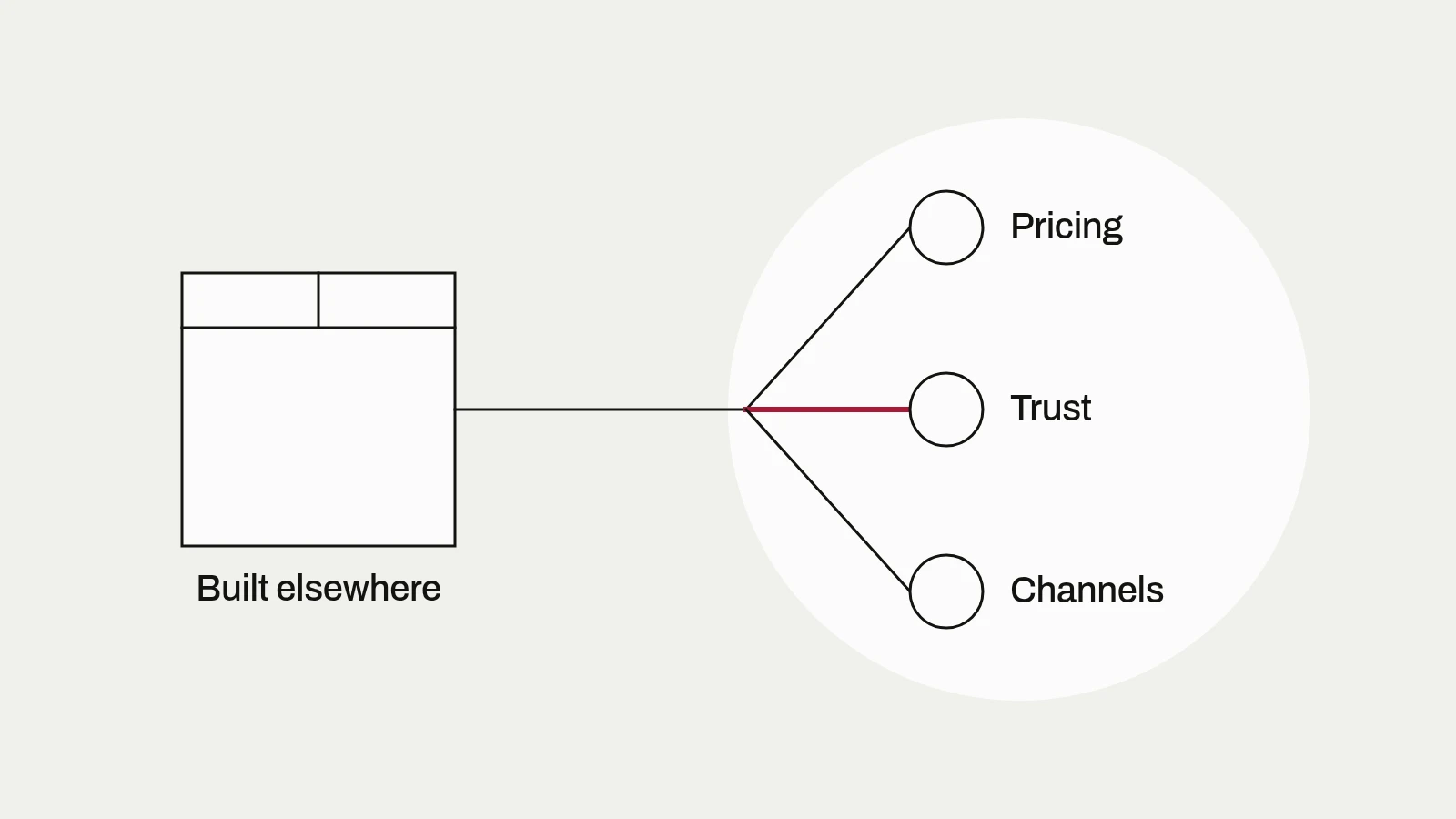
A founder sits at the IFN meetup table with an email thread open on their laptop. At home, the product sells through referrals and a short demo, and most deals close inside a few calls. Here, a US prospect liked the demo and then sent back a list of questions. Is there a security review document? Do you have a US entity? Can we talk to two US customers? What support hours do you keep in Central time? None of these came up at home. The founder wants to know which one to answer first, and whether the deal is even real.
The room hears some version of this most months. This post is peer orientation on what tends to change when a product built in one market starts selling into the US: how pricing conversations shift, which trust signals buyers look for, and which channels founders say worked first. It is not a go-to-market playbook, and it does not replace counsel or a CPA.
Disclaimer
This is not legal, tax, immigration, or financial advice. IFN shares what founders in the room tend to talk through. Contract terms, privacy obligations, sales tax, and what your status allows you to do all depend on your facts. Verify with licensed professionals and official sources before you act.
Pricing conversations change shape
Founders rarely say their price was wrong. More often they say the way they presented it did not land.
US buyers, especially in B2B software, often expect clear packaging. That usually means a small number of tiers and a plain description of what each one includes. At home, a custom quote for every customer can work because relationships carry the sale. Here, it can feel like friction, or like a sign the product is not finished yet.
Annual versus monthly comes up a lot. Some buyers want monthly so they can try the product with less risk. Some finance teams prefer annual because it is easier to budget. Founders compare notes on which option they lead with and why. The room has no single answer. What peers suggest is deciding on purpose instead of copying the home model.
Currency gets less attention. If you quote in your home currency, or in a mix, the buyer has an extra step, and you can look like a vendor procurement has to set up specially. Most founders selling here end up quoting in US dollars. Then they have to work out how that money moves between the US entity and the team at home.
Sales tax is the one people find out about late. Depending on what you sell and where your buyers are, selling into US states can create obligations you did not plan for. The room raises the issue and stops there. It is CPA territory. For Texas specifically, the Texas Comptroller is the official place to start reading.
Trust signals US buyers ask for
When founders compare notes, the same requests come up across very different products.
A US entity and a US bank account. Procurement teams often want to pay a US company, into a US account, with a W-9 on file. A foreign entity can still close deals, but it adds questions at the worst point in the sale. Peers who sorted their banking early say it took one blocker out of every deal. The banking post covers what people gather first.
Contracts that look familiar to US buyers. If your agreement was drafted under home-country law with home-country conventions, the buyer's legal team may slow down or send back heavy redlines. Founders who had counsel review their customer terms for US buyers before they started selling say later deals moved faster. The room does not pass around contract language. That work belongs with a lawyer.
Support hours that overlap. Peers say round-the-clock coverage is rarely the ask. Buyers want to know which hours you cover in US time zones and what happens outside them. A buyer who knows you answer by mid-morning Central time is usually fine. A buyer who finds out by waiting is not.
References from US customers. Your first US customer counts for more than its revenue. Some founders ask early whether that customer would take a reference call later, and they keep the relationship warm so the answer stays yes. Logos from your home market still help, but many US buyers do not know them, so founders add a sentence of context.
A clear privacy and security posture. Security questionnaires show up earlier than most founders expect, sometimes before pricing does. Peers suggest having a plain description of how you handle customer data, where it is stored, and who can access it. Getting that description right for your product is a job for counsel. The FTC's business guidance is an official starting point for understanding how US regulators think about privacy and data security.
Say where the team is
Some founders admit they tried to look local at first: a US phone number, an Austin address on the website, and vague answers about where engineering sits. Most gave it up.
It usually comes out on the first scheduling call, when time zones show. A buyer who feels misled about something small starts to wonder what else is off. What works better is plain language: where the team is based, which hours you cover, and who the buyer's US contact is. Plenty of US buyers work with distributed teams every day. Surprises are what bother them.
Channels: what translated and what did not
Founders who got traction here describe a similar order, even if the timing varied.
Founder-led sales came first for nearly everyone. Early US conversations teach you what buyers misunderstand about your product, and you lose that if you hand sales off too soon. Warm intros came next. That is one reason people keep coming back to the meetup: someone in the room knows someone who buys what you sell. Niche communities in your industry, online and in person, often did more than general startup events. Partnerships with companies that already sell to your buyer helped some founders, though they usually took longer than expected.
Paid ads mostly came later. Founders who started with ads before they knew which message worked say they spent money and learned little.
On what translated from home, the answers are mixed:
- Copy usually needed a rewrite. A straight translation rarely landed. Tone is often the gap: what reads as polite and thorough at home can read as slow or vague to a US buyer.
- Spelling and formats matter more than people expect. British spelling, day-first dates, and metric-only specs tell a US reader the site was not written for them.
- Case studies from home still carry weight when the problem is the same, but they need context a US reader can follow.
- The core product usually traveled fine. What took the most work was the story around it.
When we stop talking
The room is useful for patterns. Bring in licensed help when any of these come up:
- Customer contracts, terms of service, privacy policies, and data handling commitments: counsel who works with US commercial agreements
- Sales tax, nexus, and revenue recognition for annual or multi-year contracts: a CPA, ideally one with cross-border experience
- If you personally do sales, demos, or contract negotiation while you are in the US: immigration counsel, because what your status allows depends on your facts (the visa paths post covers where peer talk ends)
These are separate roles, and one professional rarely covers all of them.
Soft next steps
Come to the next IFN meetup with one concrete go-to-market question: a buyer request you have not seen before, a packaging decision you are stuck on, or a channel you are unsure about. Guests are welcome; register on Luma or check dates on ifn.community. The meetup happens at Station Austin. If you want the private member channel and members-only call, Become a member. Fuller go-to-market notes and buyer-readiness materials live with membership and the Resources hub as that catalog fills in.
Sources
- Texas Comptroller of Public Accounts, comptroller.texas.gov
- Federal Trade Commission, Business guidance
- Station Austin, stationaustin.org