How we validate a US market before landing
Customer discovery and research founders at IFN Austin do from abroad, without fake local presence, before they book the trip.
Every so often a founder at the Austin meetup explains that they flew in for a week of "validation." They have a hotel near downtown, a deck on their laptop, and a plan to talk to customers. Someone asks how many calls they have booked, and the answer is none yet. They were hoping the city would take care of that part. A few people around the table nod, because they tried the same thing and spent most of that week in coffee shops refreshing their inbox.
This is peer orientation from that room. It covers how founders test a US market while still living somewhere else, what they avoid pretending, and when an Austin trip is worth what it costs. It is not a customer discovery course, and it does not replace counsel.
Disclaimer
This is not legal, tax, immigration, or business advice. IFN shares what founders in the room tend to talk through. What you can do on a visit, how a contract binds you, and when revenue creates tax obligations all depend on your facts. Verify with licensed professionals and official sources before you act.
Most of the work happens before the flight
Founders who did this well describe a boring pattern. They spent weeks or months on video calls from home before they bought a ticket.
Those calls were with people who might actually buy: operators, managers, and owners in the specific niche, based in the US, who have the problem the product claims to solve. Peers find them through their existing network, warm intros from earlier customers, industry groups, and sometimes plain cold outreach that says clearly who they are and why they are asking. Time zones are the real cost. A lot of people in the room have taken US calls at odd hours for months.
Alongside the conversations, people read what is public. The US Census Bureau publishes business data that gives you a rough sense of how many firms exist in an industry and where they cluster. It will not tell you whether anyone wants your product. It can stop you from building a plan around a market that is smaller than you assumed.
They also watch how US competitors sell. They look at pricing pages, how a free trial is framed, whether a sales call comes before anyone sees a price, and which job titles show up in case studies. None of that requires being in the country. It does require looking closely and noticing where US buyers seem to expect something different from buyers at home.
The questions peers come back to in early calls are simple. How does the buyer handle the problem today? What does it cost them when it goes wrong? Who else would have to say yes?
The fake local presence trap
The room is most direct about this part.
Some founders try to look local before they are. They list a virtual address as an "Austin office," get a US phone number that rings into a voicemail nobody checks, or build a website that implies a team in Texas when the whole team is abroad. The thinking is that US buyers will trust a local company more.
Buyers notice. They see it when a meeting invite comes from a time zone twelve hours away, when the "office" is a mailbox address they can look up, or when nobody answers the phone. Once that happens, the conversation moves away from your product and onto whether you are being straight with them.
Peers say it works better to state what is true: "We're based in Singapore, we work with US customers, and we're opening in Austin." Plenty of US buyers are fine working with a company abroad. Far fewer are fine finding out that a company misrepresented itself. A registered agent or a mailing service is a legitimate tool for company paperwork. The trouble starts when you present it as a place where people work.
If you have already formed the US entity, the post on forming a US company from abroad covers how peers sequence that side. Formation and presence are separate questions.
Signals the room treats as real
Founders who have been through a few cycles sort feedback roughly into two piles.
Weak signals include likes on a post about the idea, survey answers saying "I would use this," compliments at the end of a call, and people agreeing that the problem exists. These feel good and tell you little.
Stronger signals look more like this:
- A buyer agrees to a paid pilot, even a small one
- Someone asks for a second call and brings a colleague
- A contact forwards your intro to someone else without being chased
- A prospect starts asking about contract terms, security, or billing
What the stronger signals share is cost. Each one asks the buyer to spend money, time, or some of their reputation. If nobody has done any of that yet, peers usually suggest more calls before more travel.
A status note
This comes up as a peer note, not advice. Under immigration rules, talking with potential customers during a US visit and actually doing work in the US can be different questions. Where one ends and the other begins depends on your status and on what you do during the trip. Founders in the room have been surprised by how fine that line can be, and a discovery meeting and delivering paid work on site may not be treated the same way.
Peers usually start with the USCIS page on B-1 business visitors and our post on visa paths founders talk about at IFN, which covers what the room discusses and where we hand off. Founders who travel for discovery say they talked to immigration counsel before the trip, not after.
Where the Austin trip fits
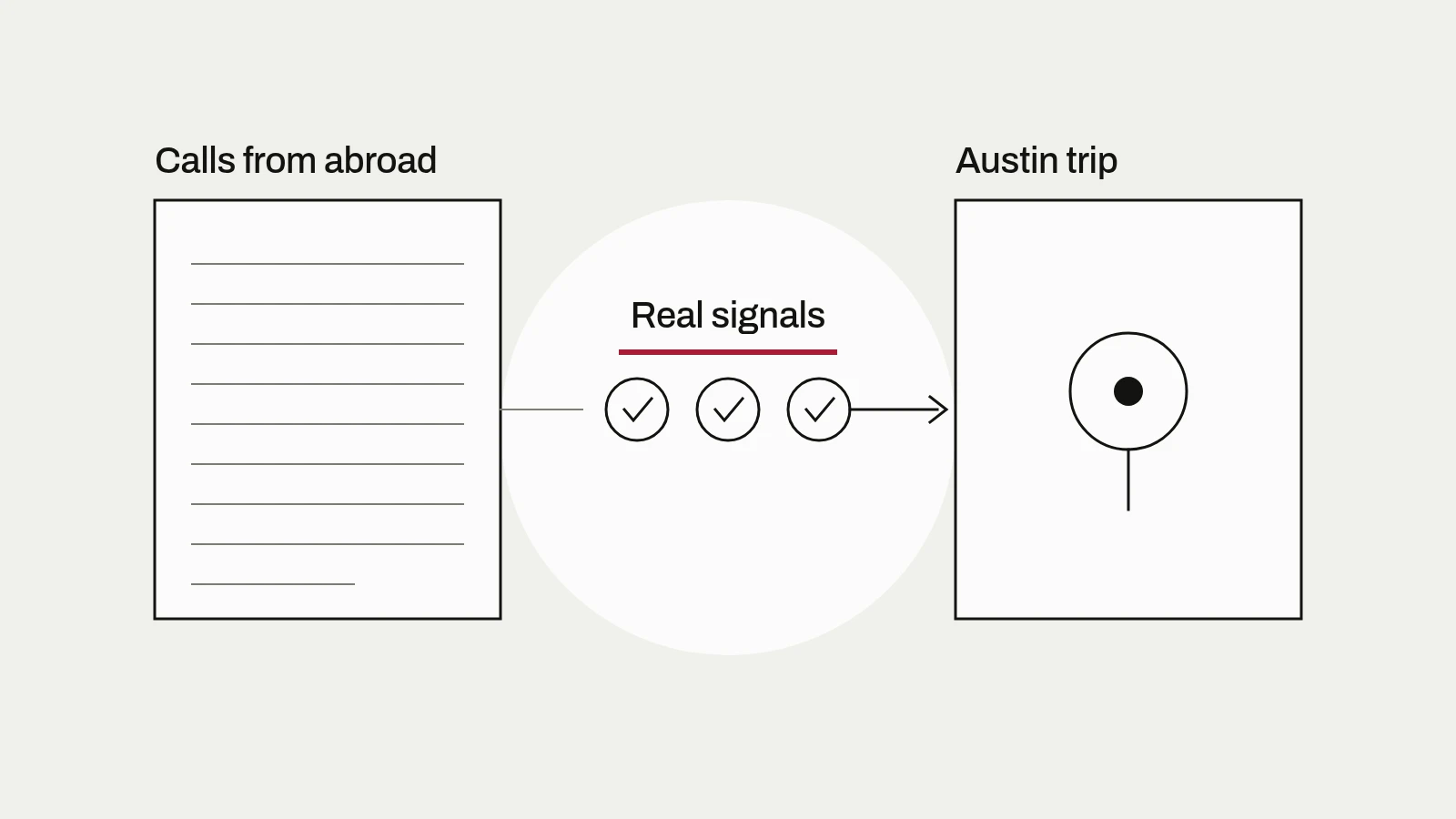
Once you have real signals, a trip starts to make sense. Peers describe it as a way to pressure-test what the calls already suggested.
A useful week usually has meetings booked before you land. These can be in-person follow-ups with people who already took a video call, perhaps a visit to a pilot customer, and time with founders who sell to the same kind of buyer. Austin helps with that last part. Many international founders work out of Station Austin at 701 Brazos St, and the IFN monthly meetup for international and immigrant founders happens there. If you bring your signals to that room, along with what you are unsure about, problems tend to come up faster than they would with another week of desk research.
Peers try not to let the trip stand in for the work. An empty calendar in Austin teaches you very little.
When we stop talking
Peer notes stop and licensed help starts when:
- You are planning a US trip and are not sure what your status allows you to do while you are there, including meetings, pilots, or anything that looks like work
- A US customer sends you a contract, pilot agreement, or data terms to sign. Peers have counsel read it first.
- Revenue from US customers starts arriving and you need to understand the tax obligations for the entity and for you personally. That is a job for a CPA, ideally one with cross-border experience.
Immigration counsel, a business attorney, and a CPA are different seats. It is rare for one person to cover all three well.
Soft next steps
Come to the next IFN meetup with one concrete validation question: a signal you are not sure how to read, a pricing pattern you noticed, or a trip you are deciding whether to book. Guests are welcome; register on Luma or check dates on ifn.community. If you want the private member channel and members-only call, Become a member. Fuller discovery guides and market research notes live with membership and the Resources hub as that catalog fills in.
Sources
- US Census Bureau, census.gov
- USCIS, B-1 Temporary Business Visitor
- Station Austin, stationaustin.org