How international founders find US legal counsel (and what peers ask first)
Which kind of lawyer or CPA fits which question, how peers at IFN Austin find them, and what they ask before signing.
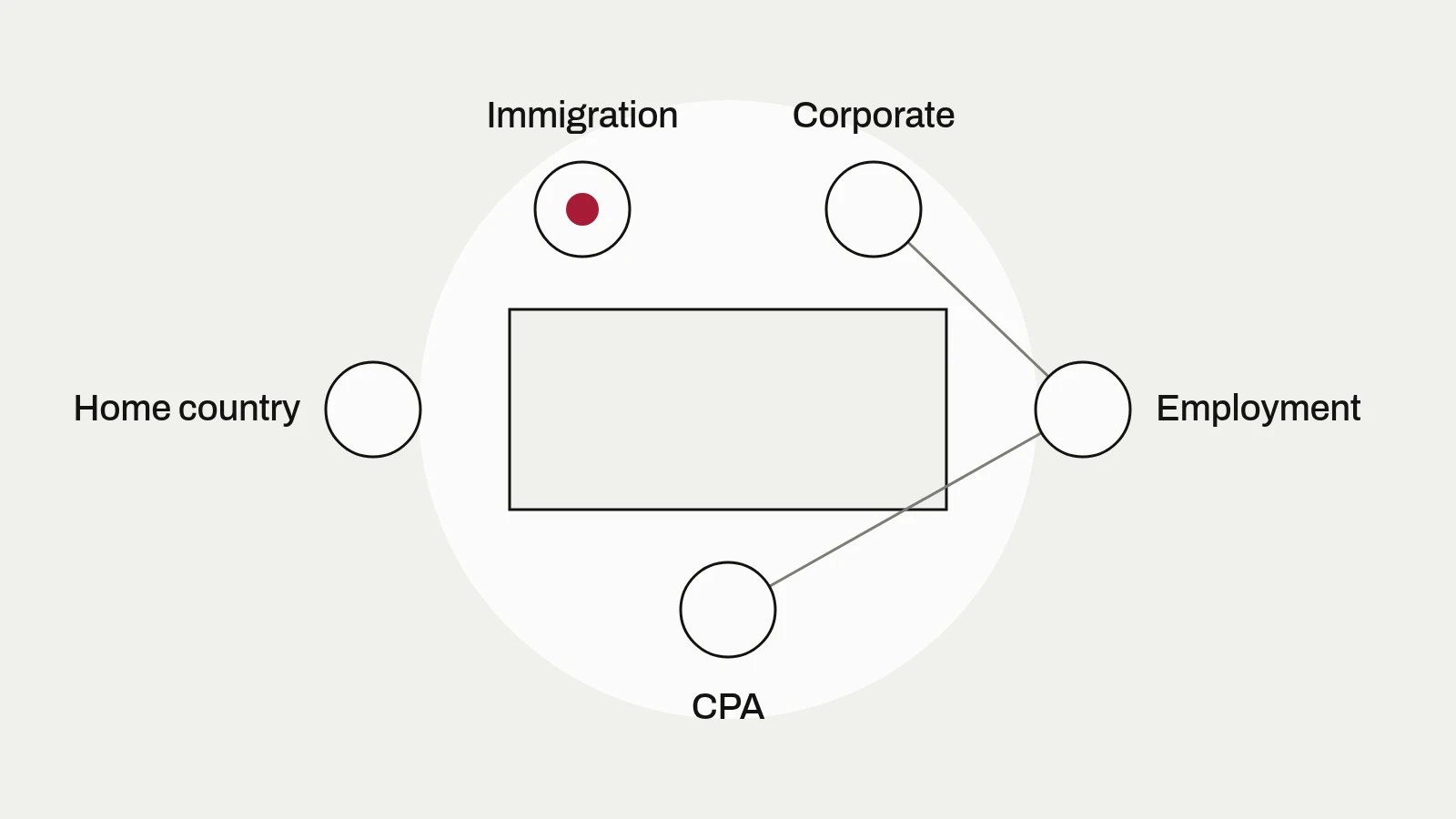
Austin's in-person meetups sometimes have a founder scrolling through three notes on their phone that all say roughly the same thing. One came from a bank call: have your attorney review the operating agreement. One came from a co-founder conversation about splitting equity. The third came from someone at the last meetup who heard about their visa plans and said, kindly, that they should talk to counsel first. The founder wants to know if that means one lawyer or three. A few people at the table answer at once. It is closer to three, plus a CPA.
Most IFN posts end by sending you to a professional. This one is about that handoff: which kind of help fits which question, how peers in the room found theirs, and what they asked before signing anything. It is peer orientation, and it does not replace the advice you are about to go find.
Disclaimer
This is not legal, tax, immigration, or financial advice. IFN shares what founders in the room tend to talk through. IFN does not refer founders to, or endorse, any specific law firm, CPA, or advisor. Licensing rules and professional standards change, and the right fit depends on your facts. Verify with official sources and make your own choice.
Different seats, different questions
The mistake newcomers describe most often is asking one professional to cover everything because they already have that person's number.
Immigration counsel handles what your status allows: whether you can work for your own company, how ownership and role affect a petition, travel timing, and changes of status.
Corporate or startup counsel handles the company: entity choice, founder equity, investor documents, and contracts.
Employment counsel comes in when you hire, especially your first US employee or contractors in other countries.
A CPA with cross-border experience covers tax for both you and the company. Peers stress the cross-border part. A CPA who does good work for local small businesses may never have filed what a foreign-owned company needs.
A home-country advisor sometimes matters as much as anyone in Austin, particularly if your home country taxes worldwide income or has its own rules for a foreign company you control.
These seats do not substitute for each other. A good startup lawyer will often say plainly that your visa question is outside their lane, and peers read that as a good sign.
How peers find them
Most people in the room started with founders a step or two ahead. A useful referral is specific: what did that lawyer handle for you, what status were you on, and how did it go when something got complicated. "They're great" tells you less than a specific story, like a lawyer who spotted an equity problem before a petition went in.
The meetup room helps before you even have names. Describe what you are trying to do, and people can usually tell you which seat you need. That narrows the search.
Some founders first meet professionals through programs at Station Austin. A short conversation at an event is a low-pressure way to hear how someone explains things.
Then comes the official check. Before a first paid meeting, peers confirm the person is licensed. The State Bar of Texas has a public lawyer search on its website where you can confirm a Texas license and see public discipline history. Immigration lawyers may be licensed in another state and still practice federal immigration law, so peers check the bar in the state where the lawyer says they are licensed. For CPAs, the Texas State Board of Public Accountancy is the licensing body.
What peers ask in a first call
Founders who felt good about their choice usually asked a few plain questions early. Who the advisor usually represents. Whether they have worked with founders on a similar status. How billing works and who does the work day to day.
Peers pay attention to whether the answers come back plain or slippery. Fuller first-call notes and ways to compare advisors live with membership and the Resources hub.
Getting your advisors to talk to each other
People say they learned this part late. How much of the company you own, your title, who pays you, and where the entity is formed can all touch your status. Immigration and corporate questions overlap more than newcomers expect.
Before a raise, an entity change, a new co-founder, or a shift in your own role, people in the room suggest putting immigration counsel and corporate counsel on the same thread. Copy your CPA when money or ownership moves. If you are still at the formation stage, Forming a US company from abroad covers what peers sequence first.
You may end up as the messenger. Peers in that seat keep a short running note of what each advisor said and when, so they are not passing along decisions from memory.
Red flags peers mention
Guaranteed outcomes. Nobody can promise a visa approval. Peers treat a guarantee as a reason to keep looking.
"Notario" style services. In some countries a notary is a legal professional. In the US, a notary public is not a lawyer. USCIS warns about people who are not attorneys or accredited representatives offering immigration help. Peers point newcomers to the USCIS page on avoiding scams before they hand anyone their documents.
Pressure to sign the same day. A good advisor gives you time to read an engagement letter. If the urgency comes from the advisor and not from your own deadline, peers treat that as a reason to pause.
Vague answers about who will handle your file, or reluctance to put scope in writing, come up too.
Talking about cost
Many founders come from places where you do not ask a professional about fees up front. In the US people expect you to ask.
The two billing models you hear about most are flat fees and hourly billing. A flat fee covers a defined piece of work and is predictable as long as the scope holds. Hourly billing fits open-ended work where nobody can say in advance how long it will take. Some advisors also ask for a retainer, paid up front and drawn down as the work happens.
Peers suggest asking what is included, what counts as out of scope, and how you will hear about extra charges before they start. Then check that the engagement letter says the same thing the phone call did.
When we stop talking
This whole post sits at one moment: when a peer tip turns into a decision about your status, your company, or your taxes. That is where the room steps back. Bring in licensed help when:
- An action could affect your immigration status, including starting work, changing your role, or travel
- You are issuing equity, taking investment, or changing your entity
- You are hiring your first employee or engaging contractors abroad
- You need to know when you become a US tax resident or how your home country treats your company
- Something has already gone wrong: a government notice, a dispute, or a document you signed without review
When a firm name comes up at a meetup, treat it as one founder's story and do your own checking. Peers can help you work out which kind of professional to call. They cannot stand in for that call.
Soft next steps
Come to the next IFN meetup with one concrete counsel question: which kind of advisor you need, how to check a license, or how to get two advisors aligned before a big change. Guests are welcome; register on Luma or check dates on ifn.community. If you want the private member channel and members-only call, Become a member. Fuller notes on choosing and working with advisors live with membership and the Resources hub as that catalog fills in.
Sources
- Texas State Board of Public Accountancy, tsbpa.texas.gov
- USCIS, Avoid Scams
- Station Austin, stationaustin.org